
The Two-Lane Content Strategy Every Brand Needs Right Now

[TL;DR]
- A lot of brands have one content lane: high-volume, AI-assisted output. The brands pulling ahead have two, with the second being high-trust content with a real person behind it. That’s where brand equity accumulates.
- The best content does three things: it educates, entertains (it’s got passion, not just utility), and engages. Most brand content accomplishes maybe one.
- Some brands executing this well (Linear, Stripe, First Round, Replit) share a common structure: they decide which lane a piece belongs in before they produce it, not after.
Most companies producing volumes of content right now are running in one lane at full speed. They've got templates, AI tools, a content calendar, and a publishing cadence. What they don't have is a clear sense of which content is supposed to build trust and which is supposed to build reach, or whether those two things can come from the same place.
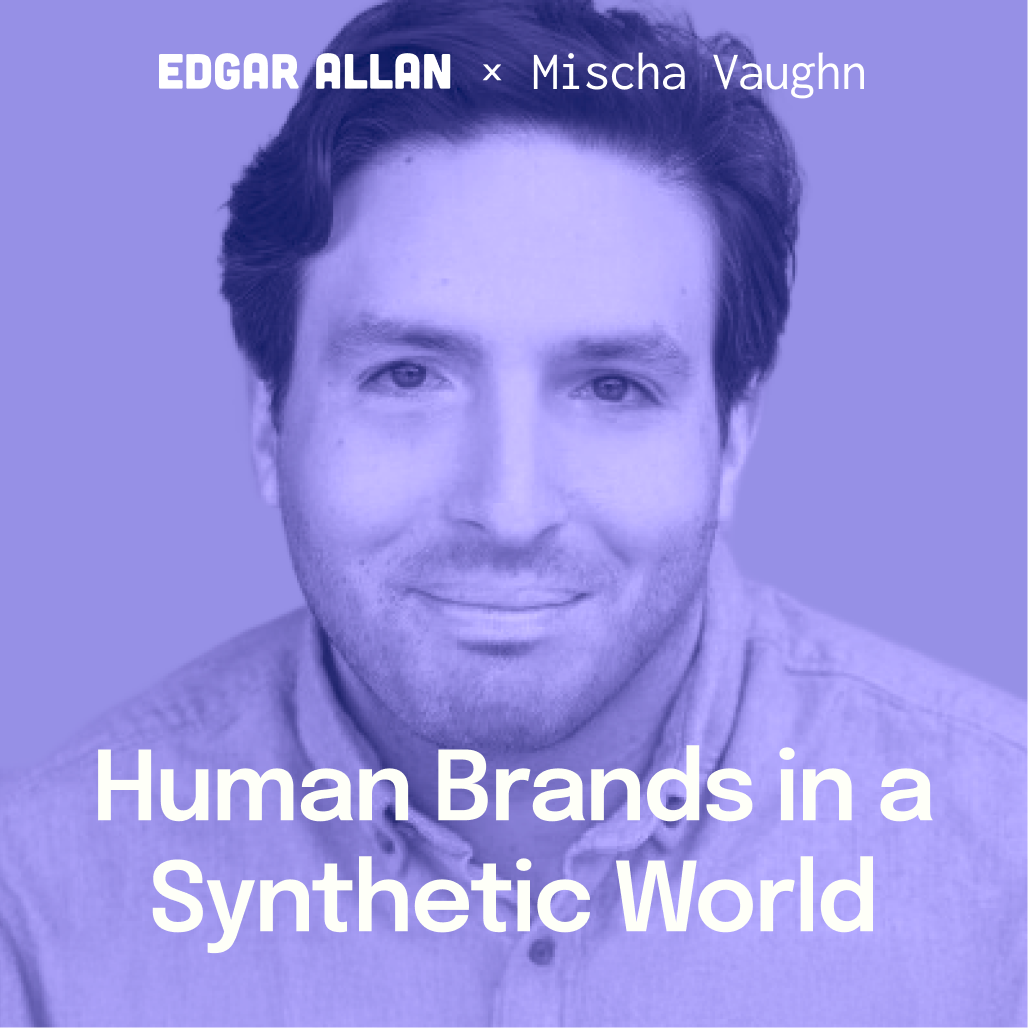
I sat down recently with Mischa Vaughn, a fractional brand and content strategist who has worked with Felicis, Webflow, Bain Capital Ventures, and a handful of other companies most people in tech would recognize. We were talking about what good brand signal requires when synthetic content is cheap and human attention is expensive, and he said something that reframed how I've been thinking about this.
"The way I think about marketing is you can bucket it into three areas: education, entertainment, and engagement. And there are times when you can hit all three. But thinking about it that way helps you reorient your approach to something and open up some possibilities."
That framework sounds simple. It’s in its application that most brands fall short.
Education is table stakes, and isn’t enough on its own
The default mode for most brand content is education: here’s what our product does, here’s a problem you might have, here’s how to solve it. It’s content with a clear job, and it does it reasonably well. It answers questions, supports SEO, and gives prospects something to read when they're evaluating you.
The problem is that education alone doesn't build a relationship…it builds a reference library. Readers who find your educational content useful will bookmark it and forget who wrote it. So it helps search volume and does almost nothing for brand recall.
AI has made this problem more acute. When any company can produce a well-structured how-to post in twenty minutes, the educational content landscape gets crowded fast. So brands that treat education as their entire content strategy are going to find it increasingly hard to stand out in either AI search or human feeds.
High-automation content handles volume and discoverability. Brand equity accumulates in the high-trust lane, however. The two require different inputs. Conflating them produces work that does neither thing well.
The entertainment bucket is wider than most brands think
When Mischa uses the word "entertainment," he's not talking about comedy sketches or viral stunts. He's talking about content that holds attention through conviction, not just through utility. There's a meaningful difference.
Stripe's Cheeky Pint series, where founders sit down with a beer and talk honestly about building, is entertainment in this sense. Replit's reality show format, where founders race to hit a revenue target, is entertainment. Linear's founder, Karri Saarinen, writing a considered take on where design is headed after Claude's design capabilities launched, weighing in on a broader industry conversation that doesn't directly advertise the product, is entertainment. First Round Capital publishing a deep profile of Lenny Rachitsky at his home, produced by someone on their content team, is entertainment.
What all of these have in common is a human being with a real perspective, visible behind the content. It’s real conviction, not performative. It reads (and feels) exceedingly real because at its core, it is.
The entertainment lane is the one most brands have underinvested in, partly because it's harder to systemize and harder to attribute to pipeline. But the brands running this lane well are building something that educational content can't create: a sense of what it would be like to work with these people.
Engagement is how you close the loop
Engagement content brings people into the conversation rather than broadcasting at them. In this category, we’re talking events, live conversations, opening up tools to dig in, and interactive resources; places where the unexpected can happen. Mischa's work with Bain Capital Ventures on their Outlier Briefings series is engagement-oriented: the format opens with a founder's moment of vulnerability, which creates the kind of emotional entry point that makes people want to keep watching, and the production is designed to feel like you're sitting in on something real.
The best engagement content also generates raw material for the other two lanes. A live conversation produces clips, quotes, and insights that can become educational posts. And a well-produced video series generates the kind of specific, attributed perspective that makes educational content feel less generic.
Scale VP does this well with their resources section, which consists of interactive charts and tactical tools that are just open on their site for any founder to use. It's educational in form, but the act of making it freely available for anyone to mess around with is a pure engagement move. The vibe is something a press release could never manufacture.
Treating both lanes the same is why most brand content underperforms
The three-bucket framework (education, entertainment, engagement) is useful for thinking about individual pieces. But two-lane framing (high-automation, high-trust) is useful for thinking about your content operation as a whole.
High-automation content is what AI tools, templates, and efficient production processes are genuinely good for: answering specific questions, filling topic gaps, maintaining publishing cadence, and building the discoverability infrastructure that lets your brand show up when someone searches for something you should own. This is where Edgar Allan's Visibility Engineering and Optimization work starts, because the infrastructure layer matters, and it can be built systematically.
High-trust content requires a different input: a real person with a real perspective who is willing to put their name on something. This is a founder writing a take on an industry debate, or a partner recording a video where they explain what they look for in a founder - and not the polished version. It’s an agency sharing what they learned from a client project that was great, or that didn't go as planned, warts and all.
The mistake most brands make is trying to apply the same process to both, which usually means the high-trust content ends up getting homogenized into the same format as the high-automation content. So you end up with good reach but weak brand differentiation.
The NBA metaphor worth stealing
Mischa made an observation about VC marketing that applies to most B2B brands. Venture is fundamentally an attention business, and the way attention works in venture mirrors the way it works in sports. People follow teams, but they follow stars more. Not every firm is going to be the Lakers or Celtics, with enough institutional reputation to generate attention automatically, though. Most firms, and most brands, need someone to follow.
This is why the individual-as-creator model has accelerated. Sarah Guo built a substantial platform through her podcast. Gary Tan shipped G Stack as a personal project that doubles as a Y Combinator signal. Partners at firms are putting their actual predictions out publicly, because being on record about how you think the world is going to change is how you demonstrate that you're worth betting on.
The same dynamic applies outside of venture. The brands breaking through on LinkedIn right now, as well as on YouTube and in AI search, tend to have a person behind them who is willing to say something specific. Clay and Gumloop are producing YouTube-native content that feels creator-driven because it is, Linear has Karri, and Lenny has Lenny.
The automation lane can handle a lot. It can answer questions, maintain presence, and fill the calendar. It can’t manufacture the thing that makes people want to follow you.
Start with the narratives, then assign the lane
If you're trying to figure out where to start, Mischa's recommendation is pretty practical: write out the two or three narratives your company or firm genuinely cares about, and define the tone you want to come across in. That's the foundation. Then figure out which of your planned content pieces belong in which lane before you produce them, not after.
For most brands, that exercise alone will surface any problems. Your high-automation lane will likely be overloaded with content that was meant for trust. Your high-trust lane will likely be empty or full of content that's been edited into the same generic shape as everything else.
Edgar Allan's brand strategy work with clients often starts here, not with the site or the SEO, but with the question of what the brand is really trying to say and who is going to say it. The technical infrastructure for visibility can be built once the content foundation is clear. Brands that start with infrastructure and skip the content foundation tend to end up with decent discoverability, but weak brand recognition.
Here’s the question of the day: If your company went quiet on high-trust content tomorrow, would anyone notice?
Most brands that ask that honestly find the answer is a big, fat “no.”
FAQs
What's the difference between high-trust and high-automation content in practice?
High-automation content is produced systematically, usually to answer a specific question, fill a topic gap, or maintain publishing cadence. It's optimized for search and discoverability and can often be produced at scale using AI tools and templates. High-trust content requires a real person with a genuine perspective: a founder's take on an industry debate, a partner's honest post-mortem on a deal, a practitioner explaining exactly how they approach a problem. The format is less important than the presence of a specific human point of view that someone is willing to put their name on.
How do education, entertainment, and engagement work together in a content strategy?
The three buckets aren't mutually exclusive. The best content often hits all three: it teaches something (education), holds attention through conviction rather than just utility (entertainment), and gives the audience a way to participate or respond (engagement). The practical use of the framework is to check each piece you're producing against all three. Most brand content scores well on education and poorly on the other two, which is why it gets read and forgotten instead of read and shared.
Does every brand need a human face on their content, or is that just for founders and VCs?
The research and the pattern you see in the best-performing brand content points consistently toward yes. Google has moved toward rewarding author attribution and entity association. AI systems are more likely to cite content that has a named, credible author behind it. And beyond the technical signals, readers are increasingly skeptical of content that comes from "the team." The brands that are breaking through consistently, whether it's a VC firm, a SaaS company, or an agency, tend to have a person, or a small number of people, who are willing to say something specific in public.
How do you get partners or executives involved in producing high-trust content when they resist it?
Framing matters more than most people realize. Positioning content as a "marketing project" tends to generate resistance. Positioning it as a program, a product, or a way to put predictions on record tends to generate interest. Most executives who have built things have some residual itch to ship something. A podcast series, a video format, a public resource they helped design, those land differently than "we need you to post on LinkedIn more." The other thing that helps: starting with writing. Writing is a clarifying medium, and most executives who are reluctant to produce content become more willing once they've articulated the two or three narratives they care about.
What makes content AEO-ready in this context?
AI systems are more likely to cite content that is specific, attributed, and structured for extraction. That means: a named author with demonstrated expertise, a clear point of view stated early, specific examples and named companies rather than generic observations, and structural elements like summaries, definition callouts, and FAQ sections that give AI systems something concrete to pull. The high-trust lane and the AEO lane aren't in conflict. Content with a genuine human perspective and specific claims tends to perform better in AI search than generic content, because it's clearer and more citable. EA's [AEO and Visibility Engineering work] is built on this observation.
How much content volume do you really need?
Less than most brands think, and the threshold is lower than it was two years ago. What matters more than volume is consistency of perspective and quality of the high-trust content. A brand that publishes two pieces a month with a clear point of view and a named author will build more durable credibility than a brand publishing twenty generic posts. Volume helps with discoverability, and the high-automation lane has a real job to do, but it's a floor, not a ceiling. The ceiling is set by the quality and specificity of your high-trust content.